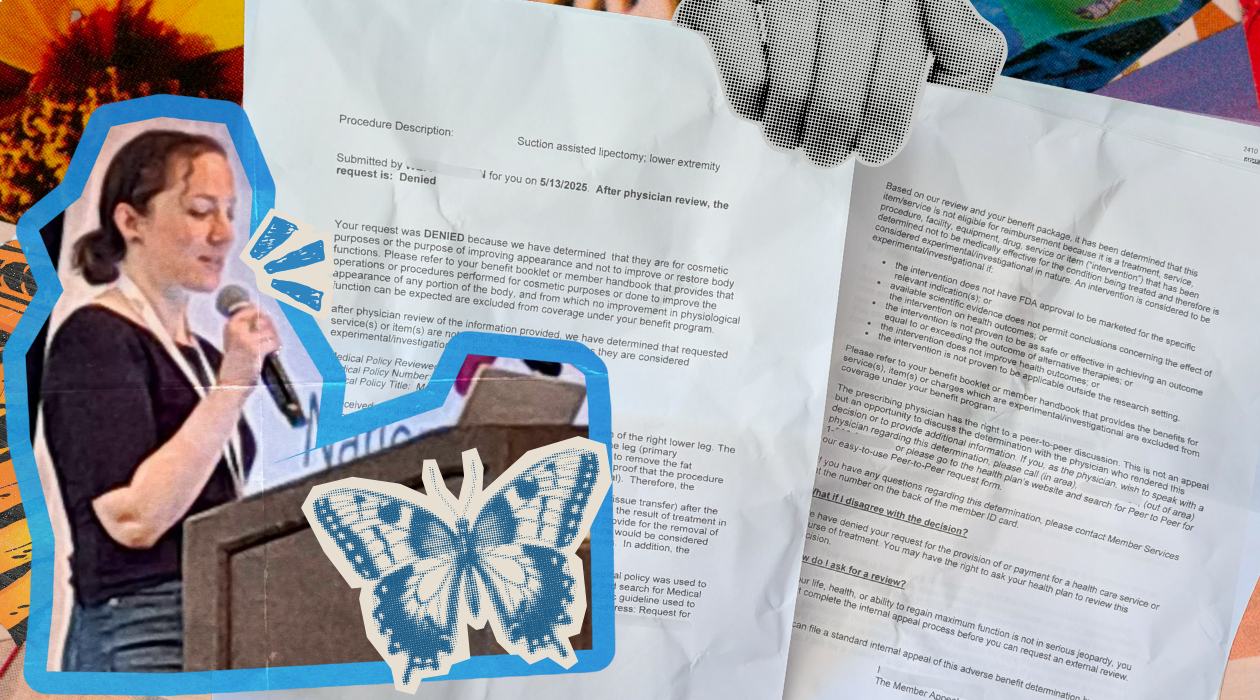


Expanding Access and Equity in Lymphedema Care: A Conversation with Clinicians Dr. Alexandra Hill and Leandrea Long
Lymphedema doesn’t discriminate against race, gender, or socioeconomic background. Neither should access to care.
Read more →
Lymphedema doesn’t discriminate against race, gender, or socioeconomic background. Neither should access to care. Read more →
Real stories, product reviews, research news, and practical tips from my Lymphie Life to yours.

Search →
Lymphedema doesn’t discriminate against race, gender, or socioeconomic background. Neither should access to care. Read more.
Like excess lymphatic fluid massaged from swollen tissue, The Lymphie Life is back in circulation — and we have lots to catch up on. Read more.
Another surgery delay has left me reeling yet again. Here’s how I’m practicing lymphatic acceptance amidst all the changes. Read more.
Launched by Alexa Ercolano in 2011, The Lymphie Life features articles detailing patients’ experiences living with lymphedema as well as tips and tricks, research news, product reviews, and interviews with healthcare professionals and community advocates.

Lymphedema doesn’t discriminate against race, gender, or socioeconomic background. Neither should access to care.
Read more →Lawin Kushaba, co-founder of Lymphedema Warriors Association Uganda, aims to combat misconceptions and improve care for those living with lymphedema in her community.
Read more →For lymphedema patient Debra Swersky, her one-legged legging is more than just an item of clothing: it’s a statement, one she wants others to have the chance to make, too.
Read more →“We have the ability to impact millions of individuals in a way that will have generational impact to come.”
Read more →Lymphedema is swelling caused by a buildup of lymph fluid, usually in an arm or leg, when the lymphatic system can’t drain properly. It’s a chronic condition, but with the right care, it can be managed well.
It can be primary (something you’re born with, due to how your lymph vessels developed) or secondary (caused by something else, like surgery involving lymph node removal, radiation, infection, or trauma).
There’s currently no cure, but you can help ease symptoms through compression therapy, manual lymphatic drainage, exercise, and skin care. Some patients may also be candidates for surgical options.
The telltale sign is persistent swelling in a limb (or another area) that doesn’t go away with rest or elevation. You may have a feeling of heaviness, tightness, or “fullness” in the affected area, as well as hardening or thickening of the skin.
Lymphedema can sometimes develop slowly, even months or years after surgery or cancer treatment, so any new or unexplained swelling is worth mentioning to your doctor.


