
In 2013, eighteen-year-old Lawin Kushaba began to experience a sharp pain in the right side of her groin seemingly out of nowhere. With no visible wound or apparent infection, Kushaba was concerned. Other symptoms developed, including fever, vomiting, and loss of appetite.
“My right foot started swelling,” Kushaba recalled. Gradually, the swelling progressed until her calf and thigh were also affected.
She didn’t know it at the time, but Kushaba had lymphadenitis, an inflammation of the lymph nodes due to infection. The trauma this caused her lymphatic system led to secondary lymphedema — although she wouldn’t receive a diagnosis for another five years.
Despite regular appointments with local doctors, there were still no answers, and Kushaba became frustrated. In attempt to treat her swelling, traditional healers and herbalists cut her skin to drain the fluids, and smeared clay soil mixed with herbs on her leg.
“It affected my mental health,” Kushaba said. “I couldn’t figure out why my leg kept increasing in size and doctors couldn’t help.”
“All Eyes on Me”
Kushaba said it took her a long time to process her new reality of lymphedema, citing emotional ups and downs as she adapted to life with an increasingly swollen leg.
Fitting in clothes or shoes became challenging due to the size of her limb. Eventually, her mobility was affected, and she could no longer walk long distances or even work.
Others were noticing her swelling, too: “All eyes were on me because my appearance kept changing,” Kushaba said. “Everyone would look at me and point fingers at me with negative comments.”
“I lost a lot of friends,” she continued. “At University, they never wanted to walk with me because of my appearance.”
Local superstition and religious beliefs rendered Kushaba a social pariah, and her community shunned her under the assumption that her swollen leg was a punishment or the result of witchcraft.
“People called me a ‘husband snatcher’ — that’s why my leg got swollen,” she said of the rumors. “My parents sacrificed me, that’s why my leg was swollen. People thought I would pass my swelling onto them.”
Going Abroad for Diagnosis — and Treatment
After failing to get a proper diagnosis or treatment in Uganda, Kushaba decided to seek help elsewhere.
In 2018, she traveled to Hyderabad, India, on a referral to see a vascular doctor at KIMS Hospital. There, she had a lymphoscintigraphy and, finally, a diagnosis of lymphedema.
She managed her swelling as best she could over the next couple of years, but limited access to resources made it difficult.

But then, around 2020, a series of connections changed her life.
Kushaba’s aunt, Fredica Baguma, worked for a non-governmental organization and got her in touch with Rainer Kraus from the German Association for the Promotion of Lymphoedema Therapy.
In 2023, Kushaba was invited to the Lympho Opt Klinik, a specialist clinic in Hohenstadt, Germany, to receive decongestive therapy for her lymphedema and learn management techniques to do at home in Uganda, such as compression bandaging and manual lymphatic drainage.
“I had a good time during my management sessions with my doctors and therapist because each day that passed, I was improving,” Kushaba said. “I enjoyed my stay because I had mentally prepared for it, despite the language.”
Not long after, Kushaba and Kraus attended a lymphatic conference where they shared her story, including how she fundraised to afford her travel and treatment at Lympho Opt Klinik. “One of the surgeons, Prof. Dr. Thiha Aung, took interest,” said Kushaba, “He managed to offer a free surgery.”
Kushaba underwent both lymphovenous anastomosis (LVA) and vascularized lymph node transfer (VLNT) in 2023, which dramatically reduced the volume of her leg.
Today, she is intensely grateful: “I had suffered for ten years without management, and this opportunity came.”
“I learned everything with passion,” she said. “At the end of the day, it feels much better to have management than not knowing.”
She continues to manage her lymphedema daily by wrapping her leg in compression bandages, wearing compression garments, using a vibration plate, and walking. Kushaba says she feels so much better and, as a result, her quality of life has improved as well.
“What was once a daunting task has now become a symbol of my strength and commitment to my health,” Kushaba said of her treatment routine. “By taking control of my condition, I’ve opened doors to a life that is rich with purpose and joy.”
Kushaba makes sure to find time to enjoy her life, from spending quality time with loved ones, exploring the beauty of nature, and engaging in hobbies that bring her peace and happiness.
“I’ve learned the importance of self-care, not just in the physical sense, but also emotionally and mentally,” she explained. “By prioritizing my well-being, I’ve cultivated a life that is as full as it is fulfilling.”
Lymphedema Warriors Association Uganda
“My journey with lymphedema has not been easy,” Kushaba said. But rather than be discouraged by the challenges, she was inspired to act. “I wanted to provide a platform for support, education, and advocacy for others affected by this condition.”
In 2022, Kushaba and fellow lymphedema patient Irene Nabirye co-founded Lymphedema Warriors Association Uganda (LWAU), a patient-focused non-profit organization to support others in the community living with lymphedema.
“The goals of LWAU are to enhance the quality of life for individuals with lymphedema through comprehensive resources, education, and advocacy, and to promote awareness and understanding of this condition among healthcare professionals and the general public,” said Kushaba.
In Uganda, one of the leading causes of lymphedema is podoconiosis, a neglected tropical disease caused by long-term exposure of bare feet to volcanic soils. Its impact on those affected is as psychosocially devastating as it is physically disabling, and many end up living in isolation due to social stigma and lack of medical treatment.
“Lymphedema patients often face stigma and misunderstanding in the community,” she explained. “Many people have misconceptions about the condition, which can lead to social isolation and emotional distress for patients.”
LWAU is working to change these perceptions and promote a more supportive and understanding environment for patients through its advocacy and education initiatives.
The organization has seen some big successes so far, including raising awareness through media campaigns, educational workshops, and organizing medical camps that provide much-needed care and instruction. They also provide support groups for patients and their families and work closely with healthcare providers and the local government to improve diagnosis and treatment.
“My life now is a blend of advocacy, community, and personal fulfillment,” said Kushaba. “Through my work with LWAU, I’m creating a legacy that I hope will continue to inspire and support those affected by lymphedema long into the future.”

Combating Lymphedema in Kamwenge District
“Today, I live not just as a survivor but as a warrior,” Kushaba said. “One who is committed to helping others navigate their own battles with lymphedema.”
However, the work is only beginning for Kushaba and LWAU.
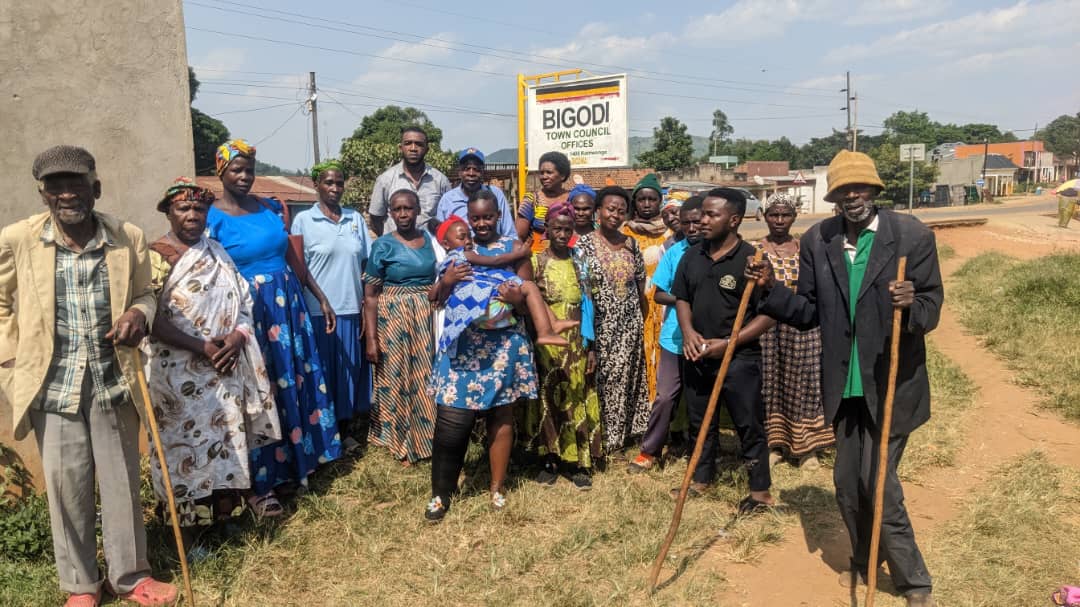
In June 2024, LWAU, the Rural Health Promotion and Poverty Alleviation Initiative (RUHEPAI), and Bugema University published a comprehensive report assessing the current state of lymphedema and its treatment in Kamwenge District. Not only did they evaluate existing healthcare facilities, but they also conducted interviews and physical examinations of patients with suspected lymphedema.
Of the forty-nine patients they assessed, forty-seven had lymphedema. Cases ranged from mild to advanced, with many facing severe complications due to delayed diagnosis and treatment.
The report cites limited access to healthcare, lack of awareness, financial barriers, and lack of access to clean water for proper hygiene as significant contributors to the disease burden.
These obstacles are not only faced by the patients but by LWAU as well.
“One of the biggest challenges we face is the lack of awareness and understanding of lymphedema, both among the public and healthcare professionals,” Kushaba explained. “Additionally, access to proper medical supplies and funding is limited.”


Uganda Lymphedema Surgical and Medical Camp
In September 2024, LWAU, together with RUHEPAI and Bugema University Hospital, are organizing a two-week medical and surgical camp. The local team will be joined by doctors from the Deggendorf Institute of Technology in Germany to offer free medical check-ups, surgeries, and treatment for lymphedema patients, as well as education for both patients and local healthcare workers.
The camp, which will occur in two locations this September, is in urgent need of funding. If you’d like to donate, you can do so through their GoFundMe.

“My dream for LWAU is to create a robust support system for individuals with lymphedema, ensuring they have access to the care, resources, and recognition they deserve,” said Kushaba.
“I envision a future where lymphedema is well-understood, and patients can live empowered and fulfilling lives without stigma or barriers to treatment.”
Want to Support Lymphedema Warriors Association Uganda?
If you’d like to support LWAU and its life-changing initiatives, there are several ways you can help:
Treatment Supplies
New or gently used medical supplies and equipment, including bandages, foam padding, compression wraps, wound care supplies, etc. can be sent to:
Lymphedema Warriors Association Uganda
P.O. Box 103167
Kampala, Uganda
Financial Donations
Donations can be sent via bank transfer to:
Lymphedema Warriors Association
Centenary Bank Natete Branch
A/C 3204675910
Volunteering
If you’re in or near Uganda, you can volunteer with the organization directly and help with patient support, community events, and advocacy efforts. Visit their website for more information.
Sponsorship
Companies, civic organizations, government and non-governmental organizations interested in partnering with LWAU can do so via sponsorship. Visit their website for more information.
You can also reach out to the organization via email at info@lymphedemauganda.org.
Photos provided by Lawin Kushaba.